Your tab is still open. Your shoulders are a little tight. You’ve checked your phone without meaning to, maybe twice in the last five minutes. You want something calming, but not another app that demands attention, and not a hobby that feels like homework.
That’s where therapeutic coloring can be surprisingly helpful.
I’ve come back to coloring on days when my mind felt too noisy for meditation and too tired for journaling. It gave my hands something simple to do and gave my thoughts less room to spiral. Not because it solved everything, but because it created a small pocket of quiet I could enter.
More Than a Trend — An Introduction to Coloring for Calm
A lot of adults find coloring again by accident. They’re buying supplies for a child, browsing a bookstore, or looking for one quiet thing to do that doesn’t involve a glowing screen. Then they sit down with a page full of shapes, start filling them in, and notice their breathing settle.
That simple experience is part of why therapeutic coloring stuck around. It gained broad visibility in the 2010s, moving from an art-therapy tool into the mainstream self-care world, and commentary around it increasingly connected it with stress reduction and focus, as described in this overview of adult coloring and stress relief. The calming effect appears to come less from picking the “right” color and more from the process itself. Repetition, pattern completion, and staying with one manageable task.
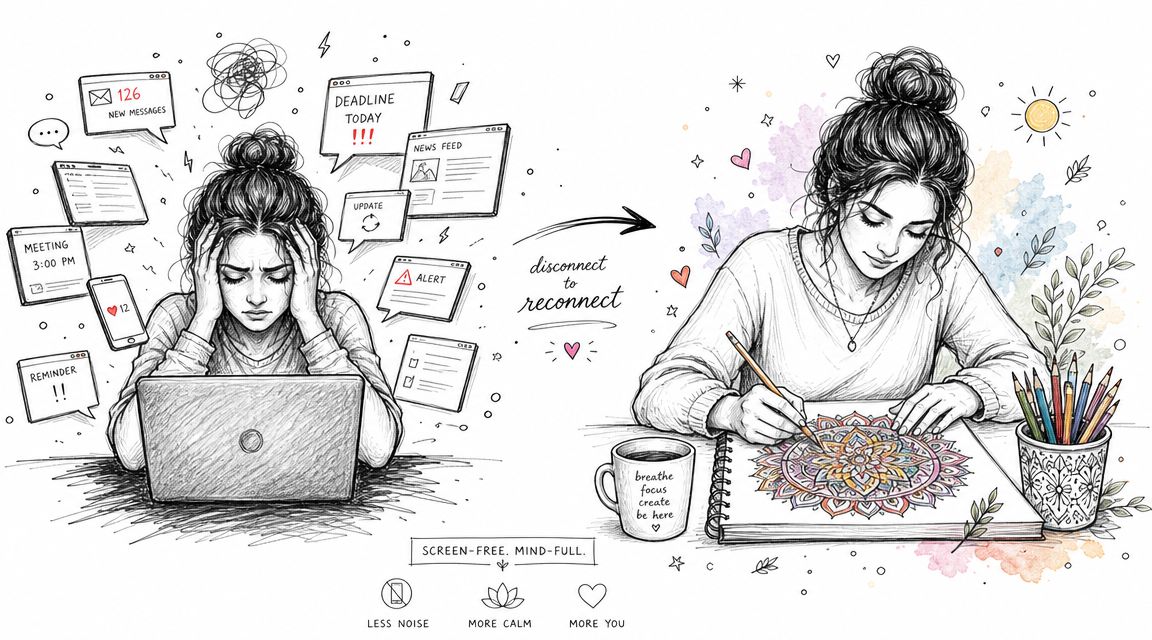
If you’ve ever thought, “This seems too basic to help,” that reaction makes sense. We’re used to treating stress relief as something complicated. But some of the most useful calming practices are ordinary on purpose.
You don’t need a deep artistic identity to benefit from coloring. You just need a page, a few minutes, and permission to do something nonproductive for once.
That’s also why coloring works well for people who bounce off stricter mindfulness practices. Sitting still with your thoughts can feel hard when your mind is already crowded. Coloring gives attention a gentle place to land. If you want ideas for that style of quiet creative focus, mindfulness coloring practices like these can make the idea feel less abstract and more doable.
What Exactly Is Therapeutic Coloring
Therapeutic coloring is coloring done with intention. Not for performance. Not to make something impressive. Not to prove you’re creative.
It’s a process-oriented practice that uses simple visual structure to help your mind settle. You choose a design, fill in shapes, follow lines, notice your breathing, and let the task hold your attention for a while. The finished page is secondary.
It’s closer to a walking meditation than an art project
A useful way to think about it is this. Some activities ask your brain to invent. Therapeutic coloring asks your brain to attend.
That difference matters.
When you draw from scratch, you make many choices at once. Composition, proportion, style, what comes next. That can be wonderful, but it can also feel demanding when you’re already mentally overloaded. Coloring removes many of those decisions. The lines are already there. Your job is to stay with the shape in front of you.
That’s why people often describe coloring as calming even when they “aren’t artistic.” They aren’t failing an art assignment. They’re practicing focus through a repetitive visual task.
What it is not
It also helps to clear up two common misunderstandings.
- It isn’t about talent. You don’t need to understand color theory, own expensive supplies, or make pages worth framing.
- It isn’t formal art therapy. Therapeutic coloring can support emotional regulation, but it’s a self-guided practice, not a clinical treatment relationship.
- It isn’t childish. The activity may look familiar from childhood, but the purpose is different. You’re using structure and repetition to calm a busy adult mind.
Practical rule: If you’re worrying about whether your page looks good, you’ve drifted away from the therapeutic part. Bring your attention back to the motion of your hand and the area you’re filling in.
Many readers get stuck on one question: “Am I doing it right?” Usually, if you’re coloring slowly enough to notice yourself while you do it, you probably are.
A mandala, a floral page, a geometric pattern, or even a simple repeating design can all work. The key is that the page gives your attention enough structure to rest on. Consider the feeling of holding a warm mug with both hands. The object isn’t the point. The steadiness is.
The Science of How Coloring Relaxes Your Brain
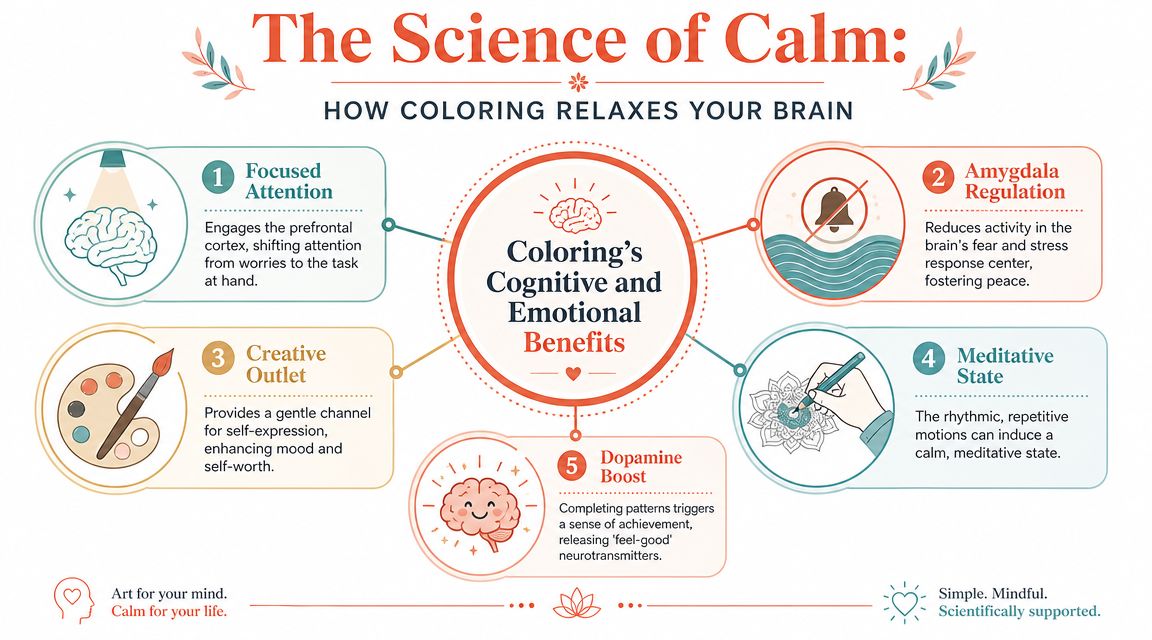
You sit down with a busy mind, fill in one small shape, then another, and a few minutes later the mental noise is not gone, but it is quieter. That shift is not random. Coloring gives your attention a job that is clear, limited, and easy to stay with.
Instead of bouncing between worries, decisions, and unfinished thoughts, your brain starts working with simpler inputs: line, shape, hand movement, and color choice. That narrowing is key, because anxious thinking often feeds on mental scattering. Therapeutic coloring interrupts that scatter with a predictable task your mind can return to again and again.
Why structure matters
Researchers have found that pre-drawn, structured coloring tasks can reduce anxiety and lower negative mood. You do not need to memorize the study details to use the idea. The useful part is simple. Structure reduces the amount of mental effort needed to get started and stay focused.
That is why blank-page creativity and therapeutic coloring do not feel the same.
With coloring, the design already holds the edges for you. Your brain does less planning and more steady noticing. On a stressed day, that can be a relief. You are not being asked to invent something from nothing. You are following a path that is already there.
A better comparison is a walking trail with clear markers. When the path is obvious, you spend less energy deciding where to go and more energy settling into the movement. Coloring works in a similar way for attention. Repeated shapes, borders, and patterns gently pull wandering thoughts back to the page.
If you want that kind of visual structure, mandala and symmetry coloring pages for calming focus are a practical place to start.
The hand movements matter too. Repetition can create rhythm, and rhythm often helps the nervous system settle. Many people notice this without having language for it. Their breathing slows. Their jaw unclenches. Time feels a little less jagged.
Here’s a short visual explainer if you want to see the idea in another format.
What coloring can and cannot do
Therapeutic coloring can support emotional regulation, and some clinical research suggests it may help as an add-on to conventional treatment for anxiety, including both mental and physical symptoms, according to this clinical study on coloring therapy as an adjunct. That gives the practice real weight. It is more than a cute hobby recommendation.
It is also helpful to keep expectations gentle. Coloring will not solve every source of stress, and it does not replace therapy, medication, or medical care. What it can do is give you a repeatable way to lower the volume for a little while.
That small effect is often enough to make a difference.
- For immediate stress relief: a short session can help contain spiraling thoughts and give your body a calmer task to follow.
- For ongoing support: repeating the practice builds familiarity, which makes it easier to return to when tension rises.
- For deeper mental health care: coloring can sit beside other supports as one useful tool, especially on days when more demanding coping strategies feel out of reach.
I find this framing encouraging because it removes pressure. You do not need coloring to be profound. You just need it to be reliable enough to help, the way a steady cup of tea, a short walk, or a few quiet breaths can help. Small practices count when you can reliably return to them.
How to Structure a Mindful Coloring Session
You sit down to color because your nerves feel a little frayed. Three minutes later, you are scrolling for the right page, testing colors you do not like, answering one text, and wondering why this calming activity is not calming you.
That usually is not a motivation problem. It is a structure problem.
A mindful coloring session works a lot like making tea. The comfort comes from the small sequence. You choose the mug, pour the water, let it steep, and stop long enough to taste it. Coloring benefits from the same kind of gentle order. A session with a clear start, a simple focus, and an easy stopping point gives your attention somewhere to rest.
Start smaller than your stressed brain wants to
Earlier, we covered why patterned, bounded activities can help settle an anxious mind. Here, the practical takeaway is simple. Give your brain fewer choices.
Too many choices create friction fast. Which page? Which colors? Do you finish it? Should you switch tools? If your goal is stress relief, you want to lower that decision load, not add to it.
Try this setup before each session:
- Choose one page ahead of time. Pick it before you are tired or overstimulated.
- Begin with one small section. A petal, a border, one ring of a mandala, one repeated shape.
- Set a short container. Ten to twenty minutes is plenty for many people.
- Remove extra inputs. Put your phone away, or if you color digitally, close the other apps first.
If orderly patterns help you settle, mandala and symmetry coloring pages are an easy place to start because the page already gives you a visual rhythm to follow.
A repeatable session that feels calm, not strict
The goal is not to perform mindfulness correctly. The goal is to make it easier to arrive.
Start with a brief transition. Put your hand on the page or tablet. Exhale a little longer than usual. That small pause tells your body, “we are doing one thing now.” I have found this especially helpful on busy days because it creates a line between the rush of the day and the quieter pace of coloring.
Then begin with the easiest area, not the prettiest one. This is helpful because your brain often relaxes after the first tiny win. A single completed shape can work like loosening the first knot in a tangled shoelace. Once that knot gives, the rest feels less stuck.
As you color, keep returning to what your senses can notice right now:
- Feel the contact. Notice pencil against paper, marker glide, or stylus pressure.
- Trace before filling. Let your eyes follow the edge of the shape first.
- Make one decision at a time. One section, one color family, one small finish.
- Return gently when your mind wanders. The next shape is your reset point.
If your attention drifts again and again, the session is still working. Coming back is part of the practice.
Many beginners get tripped up by the idea of finishing. They treat the page like a task to complete, which can pull the nervous system right back into performance mode. For therapeutic coloring, “done” can mean “I feel more settled than I did ten minutes ago.” That is enough.
A few light boundaries help protect that feeling:
| Part of the session | Helpful approach | What to avoid |
|---|---|---|
| Beginning | One breath, one page, one small area | Starting while multitasking |
| During | Notice movement, shape, and color | Judging every choice as you go |
| Ending | Stop at a natural pause point | Forcing yourself to finish the page |
If perfectionism shows up, make the target smaller. Color one leaf. One row. One band of a design.
Calm often builds that way, piece by piece.
Choosing Your Tools — Physical vs Digital
Your tools shape the experience more than is commonly realized. Some people relax most with paper, pencil shavings, and a real page on the table. Others need portability, easy cleanup, and the ability to color without carrying supplies around.
Neither choice is more legitimate. The better tool is the one you’ll use.
What physical tools offer
Physical coloring has a sensory richness that many people love. You feel the drag of colored pencil on textured paper. You can layer lightly, press harder, smudge a little, and hear the soft scratch of movement.
That tactile feedback can be grounding.
Physical tools often suit people who want a stronger break from screens or who enjoy setting up a visible calming space. A book, a pencil case, and a lamp can become part of a comforting ritual.
Common physical options include:
- Colored pencils: Good for soft layering and slower, more deliberate coloring.
- Markers: Bold and satisfying, though they can feel less forgiving.
- Gel pens: Fun for accents and details, especially on intricate pages.
- Printed pages: Easy if you like choosing from different styles without buying a whole book.
What digital tools change
Digital coloring removes friction. You don’t need to sharpen anything, store materials, or commit to one color forever. That convenience can make the habit more realistic for people who color in short pockets of time.
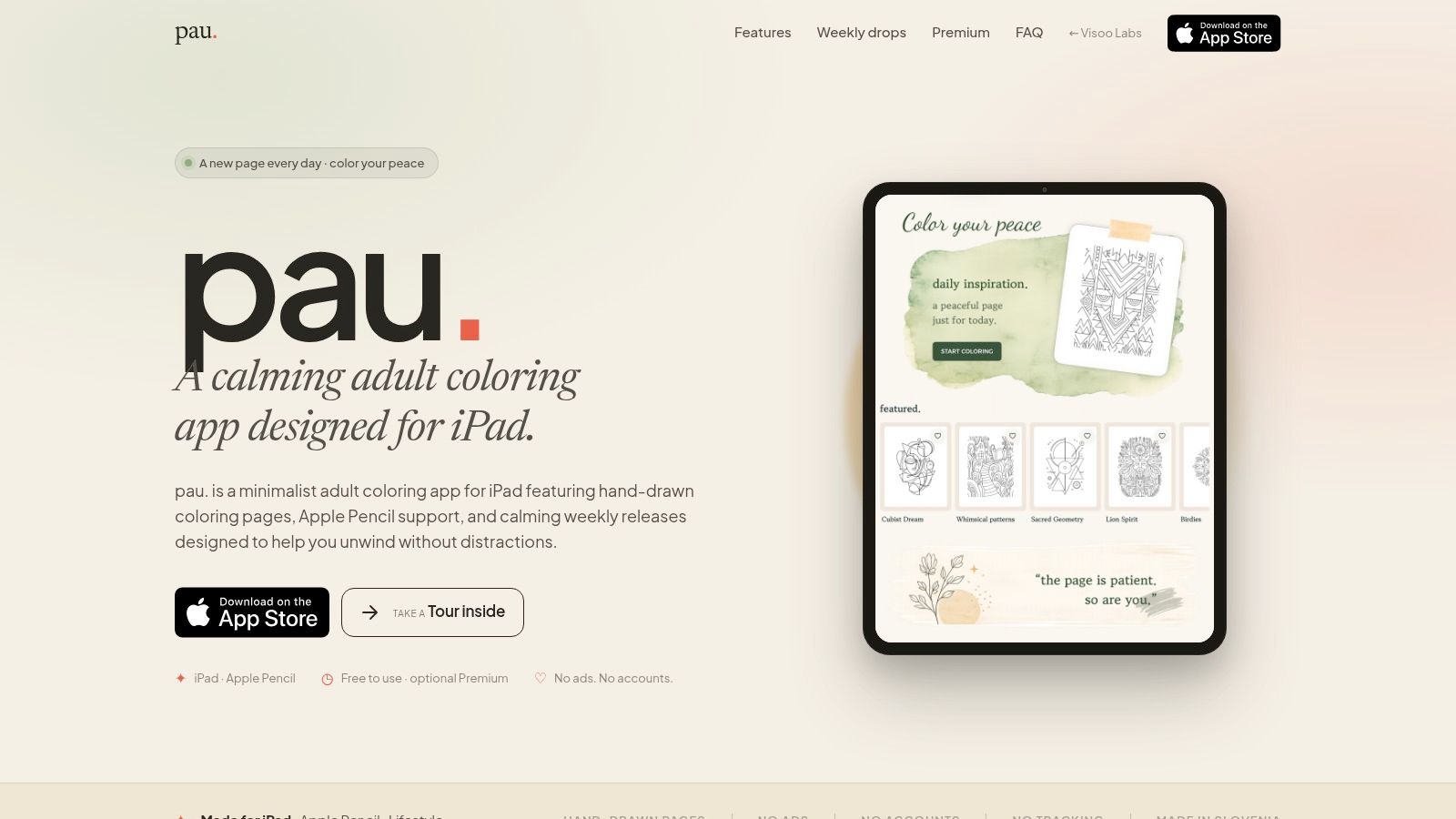
A digital setup also helps if you like clean lines, quick experimentation, or returning to unfinished work without spreading supplies across a table. Some apps focus on bright entertainment. Others are designed to feel quieter. One example is pau., a minimalist iPad coloring app, which offers hand-drawn pages, Apple Pencil support, offline saving, and an uncluttered interface.
Here’s a side-by-side view.
| Aspect | Physical Tools (Pencils, Books) | Digital Tools (Apps like pau.) |
|---|---|---|
| Sensory feel | Tactile, textured, screen-free | Smooth, portable, less setup |
| Cleanup | Requires storage and supplies | No physical mess |
| Portability | Good, but bulkier | Easy on one device |
| Flexibility | Limited to what you packed | Easy color changes and saved progress |
| Distraction risk | Lower if phone is away | Depends on device habits |
| Best for | Ritual, grounding, tactile comfort | Short breaks, travel, convenience |
Decision shortcut: If you want a deeper sensory pause, start with paper. If you want fewer barriers between stress and relief, start digital.
Some people keep both. A paper book for evenings. A tablet option for lunch breaks, waiting rooms, or travel days. That mixed approach works well because it matches the tool to the moment instead of forcing one format to do everything.
How to Weave Coloring Into Your Daily Routine
A sustainable coloring habit usually doesn’t begin with a long session. It begins with a moment that already exists.
Your coffee brews. Your meeting ends early. You reach for your phone before bed. Those are openings.
Think in tiny rituals
Instead of planning a dramatic self-care block you probably won’t keep, attach coloring to something stable.
You might color a small section while tea steeps in the evening. You might spend a few quiet minutes with a digital page after lunch before reopening email. You might leave a book on the kitchen table and fill one shape after tidying up.
These tiny sessions matter because they lower resistance. You’re not asking, “Do I have an hour?” You’re asking, “Do I have one calm pocket?”
A few easy examples:
- Morning reset: Color one small area before checking messages.
- Midday break: Use a short session to separate one work block from the next.
- Evening wind-down: Swap part of your scrolling time for repetitive, low-pressure coloring.
- Shared family quiet time: Sit with a child or teen and color side by side without turning it into a lesson.
The habit becomes more durable when the bar stays low. Keep the page visible. Keep the stylus charged. Keep the pencils in reach. Make starting easy enough that your stressed self can still say yes.
Common Questions About Therapeutic Coloring
Do I need to be artistic
No. The benefit comes from the act of coloring, not from producing impressive art.
Many adults get stuck because they confuse self-expression with skill. Therapeutic coloring asks much less of you. You don’t need to invent an image. You just need to stay with a shape, a stroke, and a few minutes of attention.
If anything, being “bad” at art can help, because it gives you fewer expectations to manage.
Is this the same as art therapy
No. That distinction matters.
A brief coloring session can reduce perceived stress by about 10%, but it isn’t a substitute for therapist-led art therapy, which in a Drexel comparison increased positive feelings by 25% and self-efficacy by about 7%, while coloring reduced negative mental states by about 7%, according to Drexel’s report on coloring books and art therapy. The practical takeaway is clear. Coloring is useful for short-term stress regulation, but guided therapy does more when someone needs deeper support.
That doesn’t make coloring less worthwhile. It just gives it the right job.
What if I get bored
Boredom usually means one of three things. The page is too intricate, the session is too long, or you’re expecting a dramatic emotional shift every time.
Change the variable, not the whole practice.
- Switch page styles: If detailed mandalas tire you out, try bolder floral or geometric pages.
- Shorten the session: Stop while you still want a little more.
- Change the moment: Coloring may work better at night than during a rushed afternoon.
- Use a theme: Warm tones one day, cool tones another, or one page per mood.
Coloring doesn’t have to feel profound to be helpful. Sometimes “a little quieter than before” is enough.
If you want a simple way to try digital therapeutic coloring on iPad, pau. offers hand-drawn pages, Apple Pencil support, offline progress saving, and a quiet interface built for short, focused coloring sessions.
Frequently asked questions
Do I need to be artistic to benefit from therapeutic coloring?
No. The benefit comes from the act of coloring, not from producing impressive art. You do not need to invent an image — just stay with a shape, a stroke, and a few minutes of attention.
Is therapeutic coloring the same as art therapy?
No. A brief coloring session can reduce perceived stress, but it is not a substitute for therapist-led art therapy. Coloring is useful for short-term stress regulation; guided therapy does more when someone needs deeper support.
What if I get bored while coloring?
Boredom usually means the page is too intricate, the session is too long, or you are expecting a dramatic shift every time. Switch page styles, shorten the session, change the moment, or use a color theme — calm does not have to feel profound to be helpful.
Tina Mrak writes the pau. journal from Ljubljana — usually on slow afternoons, often while coloring.